
One platform.
Every fuel.
The aSOFC with nanocrystalline electrolyte turns hydrogen, methanol, diesel — virtually any hydrogen-carrying fuel — into electricity. No combustion. No rare materials.
European
Innovation
Council
European Innovation Council
Vetted and funded by the European Innovation Council.
kraftwerk has been reviewed by the EIC and funded through the EU programmes UAVEndure I & II. Both grants are public EU records — verifiable at any time.
1 of only 10 EIC-backed companies — EIC Corporate Day 2026
Funded by the European Union (kraftwerk TUBES GmbH, Dresden).
Efficiency
The most direct way to turn gas into electricity.
Up to 92 % electrical efficiency on gas (LHV) — because the aSOFC never burns anything. No flame, no turbine, nothing spinning: fuel becomes current in a single electrochemical step.
Electrical efficiency of the 1 MW BOX on gaseous fuels (LNG, CNG, hydrogen blends).
Diesel and other liquid fuels reach up to 82.4 % in the BOX — the same platform, no rebuild. Hydrogen and ammonia: up to 74.8 %.
Carnot limit at the aSOFC’s own operating temperature: 1 − 298 K / 873 K = 65.8 %. A machine that burns fuel cannot pass this line at that temperature — a fuel cell is not bound by it, because it never makes heat in the first place.
Burning it: four steps
Every step gives something away as waste heat, friction and noise. That is why the chain is capped before the electricity even arrives.
The aSOFC: one step
Ions cross a ceramic membrane — that flow is the current. No flame, no pistons, no turbine, nothing spinning. Nothing to lose along the way.
In plain words: an engine has to make heat first, and every heat engine is capped by physics — it never gets all of it back out. The aSOFC skips the heat and takes the electricity straight out of the chemical reaction. There is nothing in between to lose it to.
The build
From matchstick to power plant.
One cell. Three scales. From a gram to a megawatt.
01 — kraftwerk TUBE
38 mm. One gram.
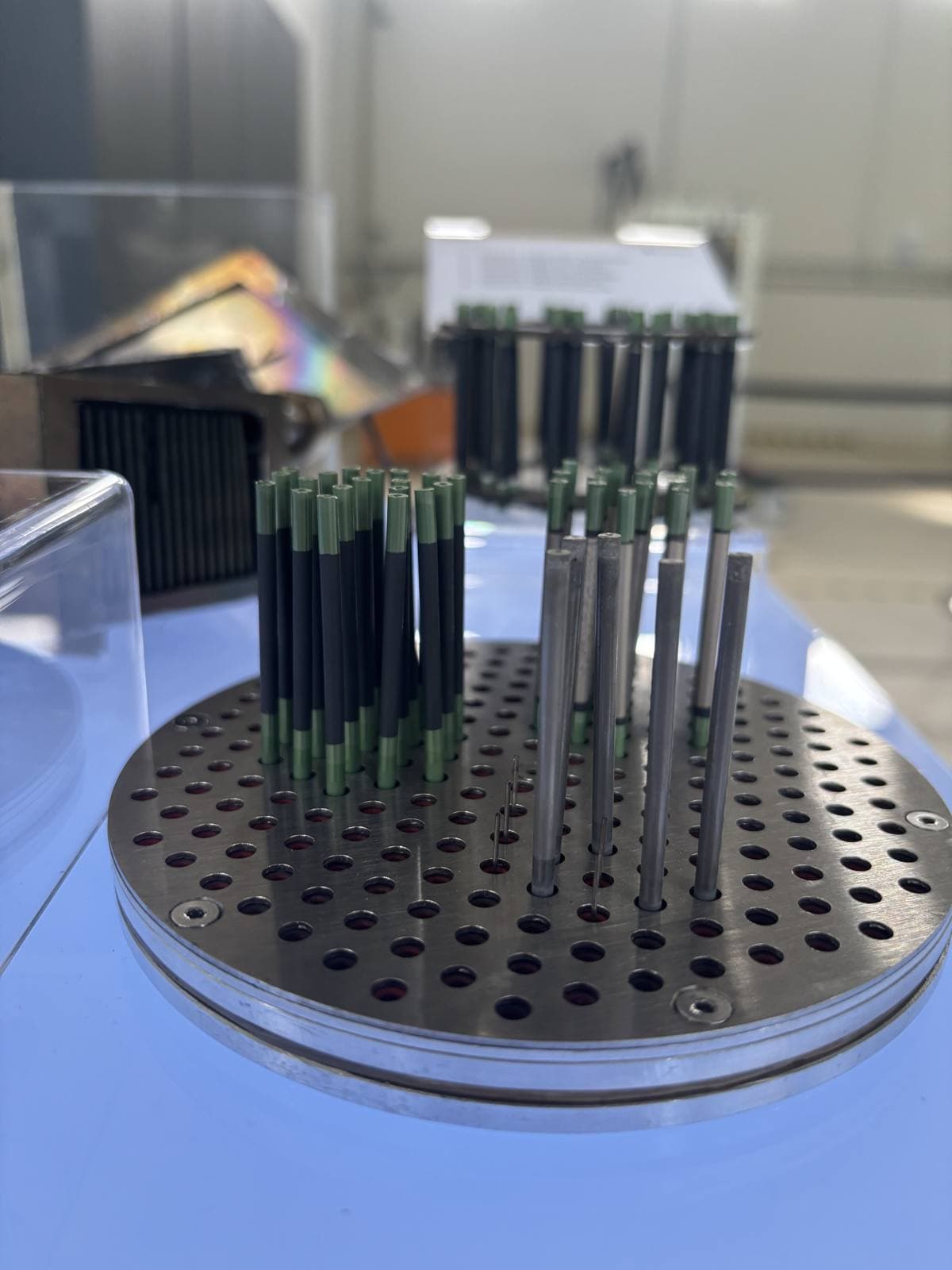
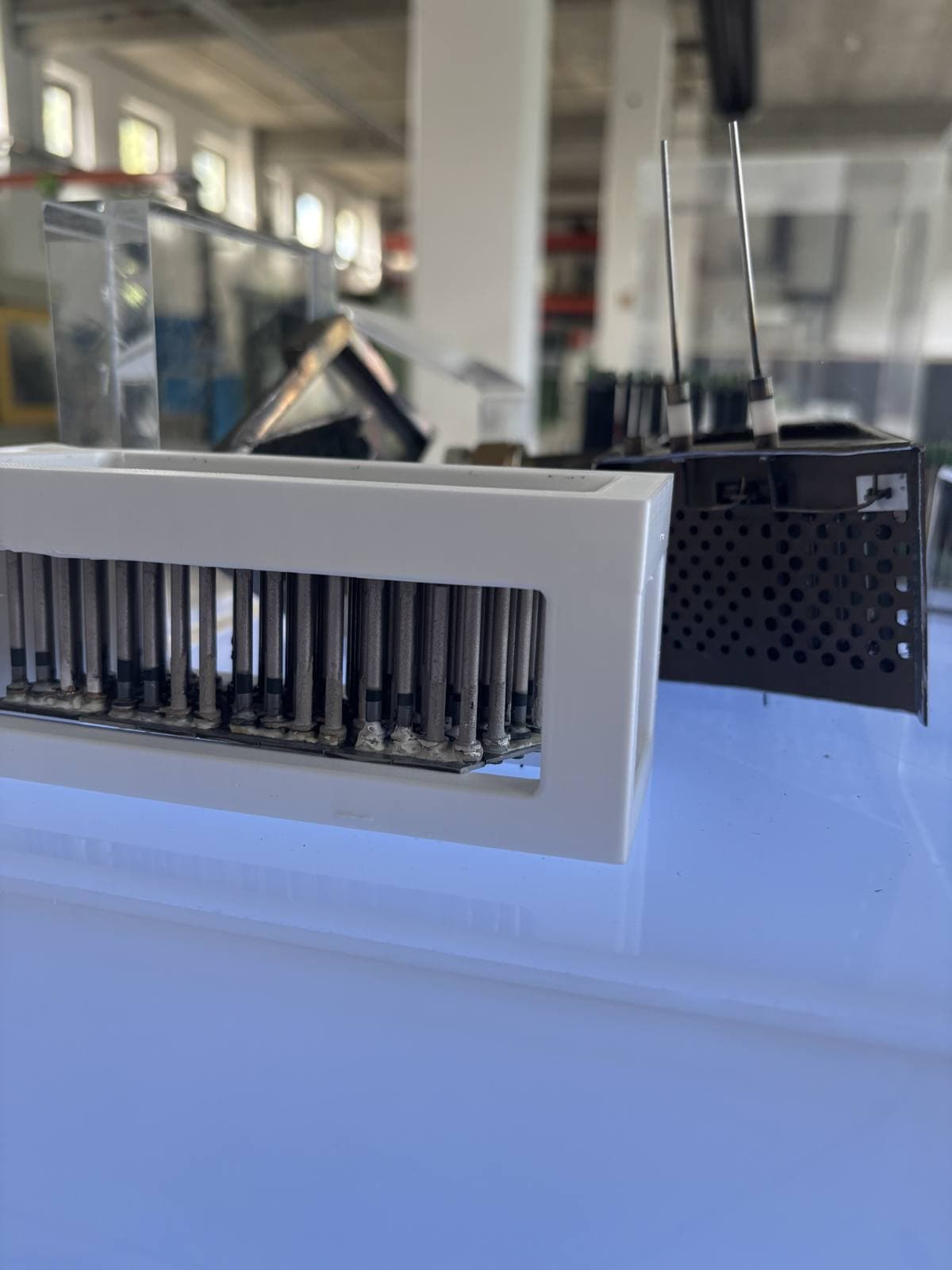
A ceramic micro-tube with a nanocrystalline electrolyte. Fuel flows through it, ions cross the membrane — and that flow of ions is the electric current. Nothing burns, nothing spins.
Weight
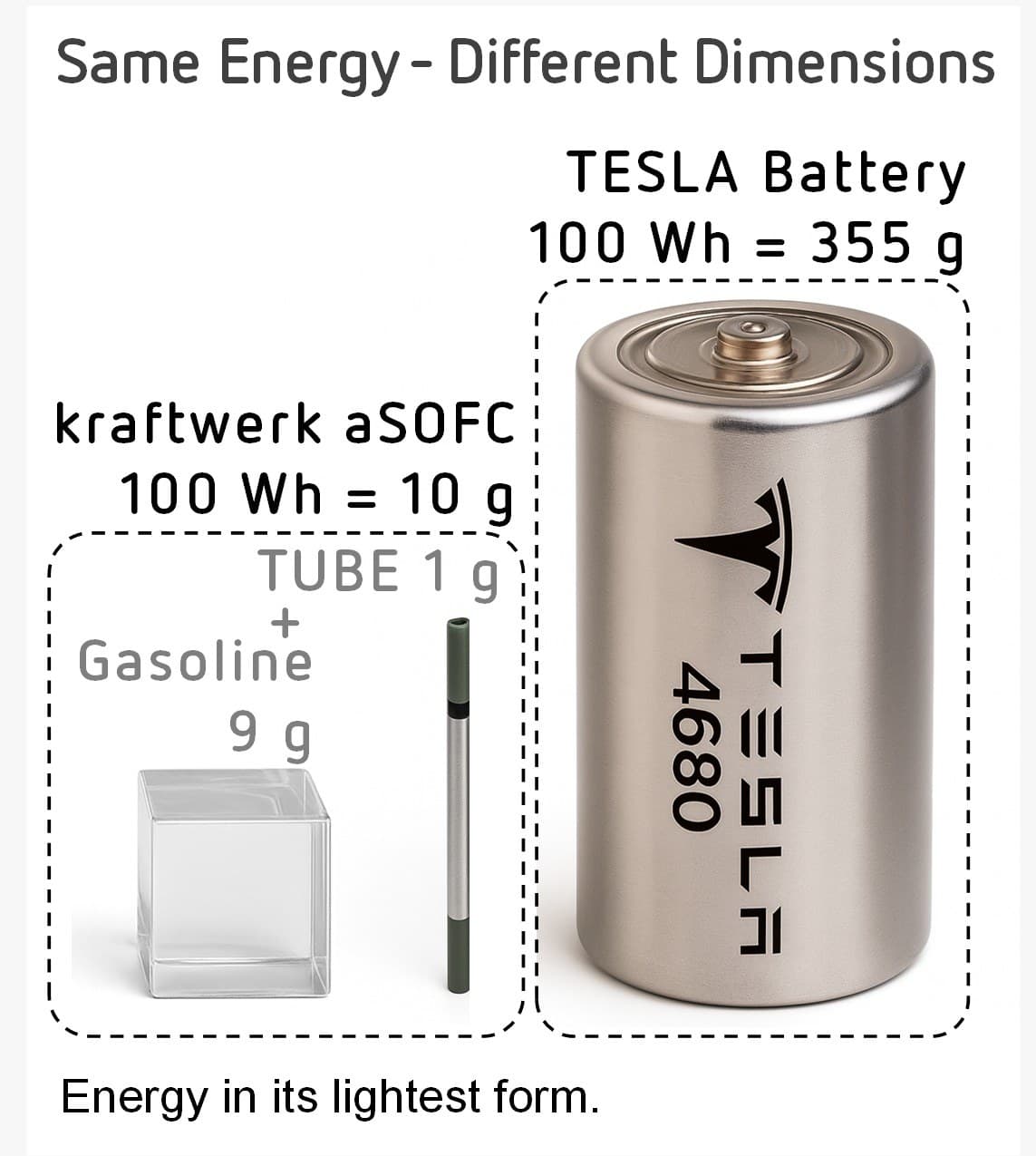
100 Wh weigh 10 grams. Not 355.
A battery has to carry its energy with it, as metal. The aSOFC converts it from fuel — that is the whole difference.
SAME ENERGY · TUBE 1 G + GASOLINE 9 G = 100 WH · ROUND CELL 355 G
Key performance
0×
energy density vs. batteries
up to
0%
electrical efficiency on gas (LHV)
0%
lower production cost vs. battery systems
<1 ms
dynamic response (warm)
>80,000 h
system lifetime
~20 dB
near-silent operation
It's real
Filmed in Dresden. Not rendered.
Cell production, clean room, test stands, the laser on the line — the technology at work, on site. Every frame on this page is real footage.
Trusted by Industry.
Built for You.
Validated by an Automotive Partner
Tested and verified with one of the world’s leading automotive innovators.
$0 B+
in Letters of Intent
Letters of intent exceeding $6 billion from automotive and energy partners.
0
granted patents
33 granted patents on the advanced multi-fuel solid oxide fuel cell system.
Cashflow-Positive & Independent
Fully bootstrapped. Profitable from the start. Built without venture capital.
Made in Germany
Designed, built, and assembled in Dresden with premium industrial standards.
Feel the difference
2 minutes. Full tank. 1,500 km.
2 min at any pump → ~1,500 km per module
Hours at the plug → 400–500 km
*with renewable fuels·schematic, not a certification
And nothing dirty comes out.
No combustion, no exhaust: near-zero NOx, SOx and particulates at the point of use — and with renewable fuels, the CO₂ loop closes.
- Nothing burns — there is no flame in the cell.
- Around 20 dB: you stand next to it and hear nothing.
- With renewable fuels the CO₂ loop closes.
Next step
Proven EVs, upgraded by kraftwerk — 38 models in the catalogue.
Maritime — the lead application
Built for the sea.
Shipping is where batteries hit their hardest limits — and where the aSOFC plays its strongest cards as a potential marine power solution:
- Runs on existing bunkering infrastructure — no new port build-out.
- Renewable fuels close the CO₂ loop — carbon-neutral on balance.
- Very high efficiency, significantly lower system cost.
- Based on our data: far lower lifecycle burden than battery-only.
Applications
Where batteries hit their limits.
One cell platform — it scales to wherever power is needed.
The systems
One technology. Every scale.
01 — STATIONARY POWER
kraftwerk BOX — 1 MW container
1,000 kW multi-fuel power in a standard container — ~35 redundant modules, 5-minute cold start, plug & play.
Discover the container →02 — MOBILITY
SURFBOARD™ 30 — mobility
8× lighter than batteries: 200 kWh per flat tank module, refueled in 2 minutes.
Cars & trucks →03 — POWER TO GAS
Also: power to gas
The system runs in reverse, too — surplus electricity becomes synthetic methane at ~$35M per TWh, drop-in for existing gas infrastructure.
The closed loop →Proof
Proven. Not promised.
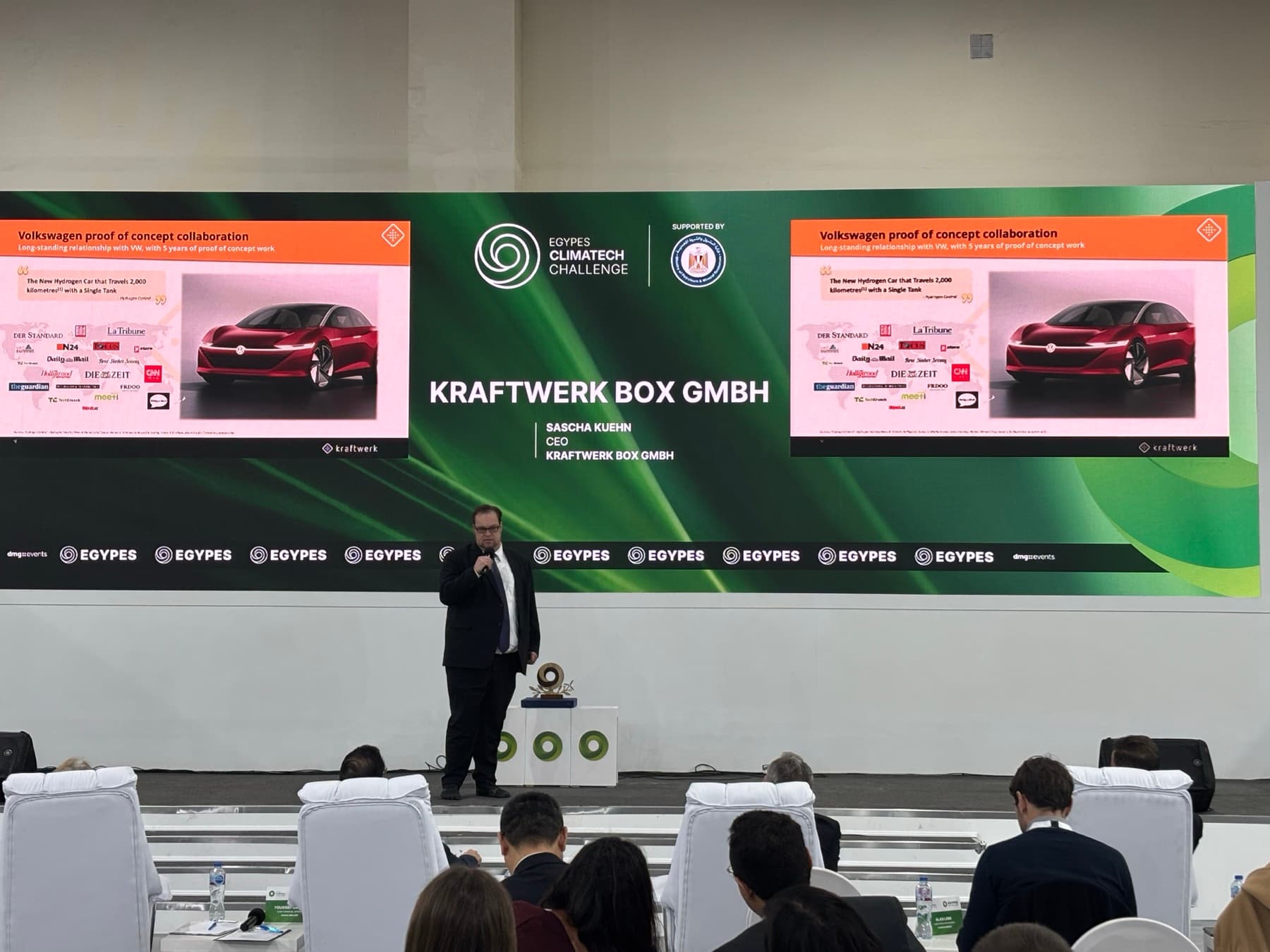
Five years of proof of concept with the Volkswagen Group — a test vehicle travelling 2,000 km on a single tank.
On the record
- EGYPES Climatech Challenge 2025 — winner, Cairo
- 2 EU grants (EIC) — public CORDIS records
- 33 granted patents
- >1,000 h endurance runs
- Letters of intent exceeding $6 billion
TRL 7 completed — the cell has proven itself in a relevant operating environment. Filmed at our test stands in Dresden.
Join in
Back the future. Live.
$239,488,049
of $500,000,000 goal — live
Every pledge moves production closer — the counter climbs in real time, and a spot on the list starts at $0.